Managing a ball valve’s open or closed position is crucial for ensuring the smooth operation of systems that rely on fluid flow control. Ball valves are widely used in industrial applications due to their simplicity, reliability, and ability to handle high-pressure fluids. The mechanism of controlling a ball valve’s position involves understanding how the valve works, the types of actuators used, and how to monitor and maintain the valve in the desired state. A ball valve consists of a spherical ball with a hole through the center. This ball is placed inside the valve body and can be rotated to control the flow of fluid. When the hole in the ball is aligned with the pipe, the valve is open, and fluid can pass through. When the ball is rotated 90 degrees so that the hole is perpendicular to the pipe, the valve is closed, and the flow of fluid is blocked.
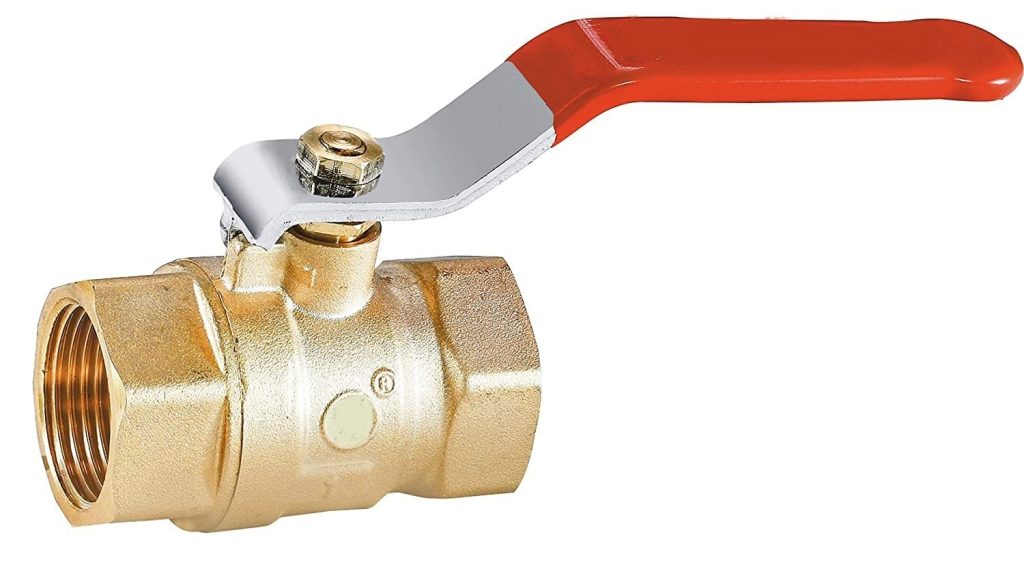
The simplest form of controlling this mechanism is by manually turning the valve handle, which directly rotates the ball. In manual systems, the ball valve’s position is typically determined by the angle of the handle. A fully open valve will have the handle aligned with the pipe, while a fully closed valve will have the handle perpendicular to the pipe. However, in more complex systems, especially where valves are large, located in hard-to-reach places, or require precise control, the ball valve may be equipped with an actuator. An actuator is a device that automates the opening and closing of a ball valve. There are various types of actuators, including electric, pneumatic, and hydraulic actuators, each suitable for different applications. Electric actuators use motors to rotate the valve stem and are ideal for applications requiring precise, remote control. Pneumatic actuators use compressed air to generate rotational force and are commonly used in industries that require rapid valve movement.
Hydraulic actuators operate using pressurized fluid, offering high torque for larger valves. Managing a ball valve’s position using actuators requires additional considerations. For instance, when using an electric actuator, it is important to ensure that the power supply is stable and the actuator is capable of providing the necessary force to open or close the valve. Pneumatic actuators should be maintained with regular checks on air pressure and seals, as a loss of pressure can cause the valve to fail in achieving its intended position. Hydraulic actuators require monitoring of the hydraulic fluid levels and pressure to ensure proper valve function. Positioners are also used in automated systems to enhance control over the ball valve open or closed. A positioner is a device that adjusts the actuator’s movement to ensure the valve opens or closes to the correct degree. Positioners receive feedback from sensors that measure the valve’s position and adjust the actuator to correct any discrepancies.